New grants focus on clergy wellness Posted on June 23, 2026
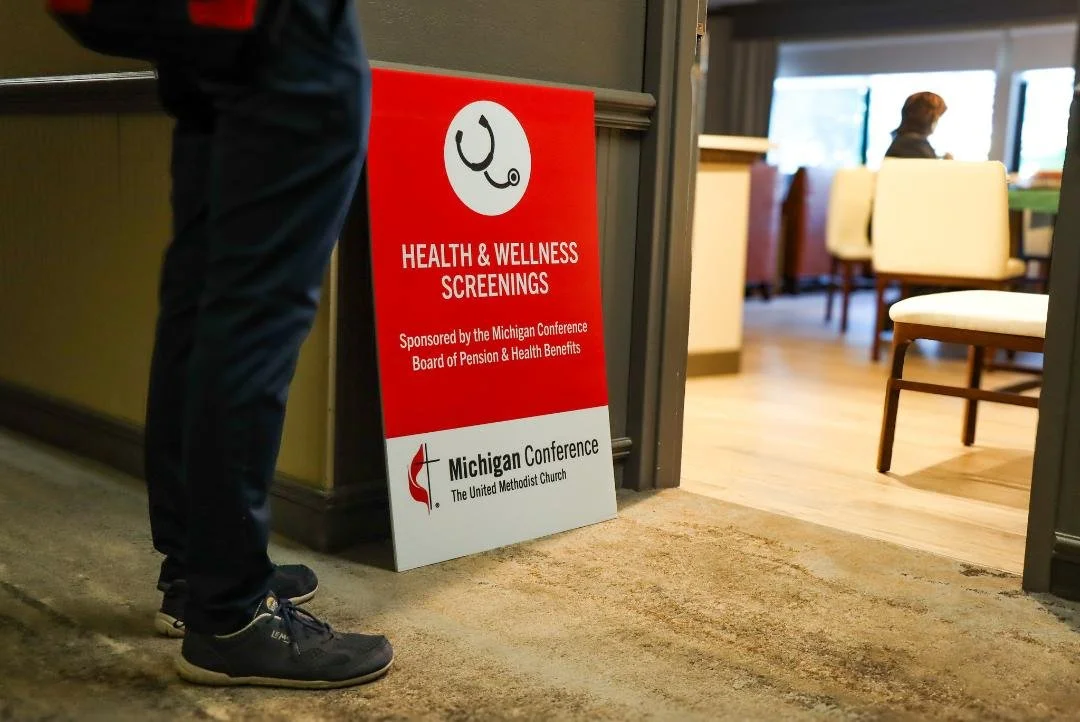
Until recently, the Michigan Conference Office of Benefits and Human Resources conducted health and wellness screenings for pastors each year at Annual Conference. Rev. Joel Walther, Director of Conference Benefits and Coordinator of Human Resources, announces a new grant initiative to help fund clergy renewal leaves and clergy wellness initiatives. ~ MIphoto/Jonathan Trites
On July 1, two new Michigan Conference initiatives begin, providing grants to help pastoral leaders improve their health and well-being.
GLENN M. WAGNER
Michigan Conference Communications
Those who respond to God’s call and assume the mantle of pastoral leadership in The United Methodist Church in Michigan are well aware of the personal costs of their service.
At the outset, these costs often include tuition and educational commitments for college and seminary, along with a willingness to serve and relocate as needed. For example, the average cost of a three-year Master of Divinity degree from a United Methodist seminary, including tuition, fees, housing, food, and books, is $45,000 to $55,000 per year.
Pastoral responsibilities can be stressful and unanticipated.
Here is a list of some actual pastoral surprises that were not included in the seminary curriculum:
a midnight phone call from an emergency room requesting immediate in-person pastoral care for a parishioner facing a life-threatening situation
a day-off phone call from a choir member complaining of unwanted sexual harassment by another choir member
a melee in the church fellowship hall during a funeral luncheon, triggered by a long-simmering family feud and requiring police intervention
a church boiler that died before Christmas during a prolonged spell of snow and cold, along with the news that replacement costs far exceeded church savings
a church member who slipped on the ice in the church parking lot and broke a hip
news that renters in the house next to the church day-care playground were selling drugs
news that the congregation’s largest contributor had filed for divorce and was moving out of state
In addition to unexpected challenges, the routine work of preparing for worship, delivering inspirational sermons, offering pastoral care and counseling, officiating at weddings, conducting funerals and baptisms, caring for church ministries and buildings, and assisting with denominational administration can also take a spiritual, physical, and emotional toll.

Fitness and wellness are encouraged at Annual Conference. Here, members participate in cardio drumming exercise.~ MIphoto/Jonathan Trites
The Bible reminds us of the challenges of ministry. Jesus invited his disciples to take up their cross daily and follow him (Luke 9:23). The truth, not forgotten, is that among Jesus’ first twelve disciples, Judas committed suicide, and ten others were martyred and died violently because of their devotion to Jesus. John, who cared for Jesus’ mother, Mary, was also exiled to the island of Patmos. John died at an old age.
Rev. Joel Walther is well aware of the ongoing personal and economic costs of service to those who follow Jesus as pastors in The United Methodist Church. Walther grew up as a United Methodist preacher’s son in Minnesota and married another United Methodist pastor whose grandfather was a United Methodist pastor in Michigan. Walther has served as a pastor in parishes in Michigan before being named in 2023 to serve the Michigan Conference and all of its clergy as Director of Conference Benefits and Coordinator of Human Resources.
Walther is grateful for the five months of mentoring he received from Rev. Don Emmert prior to Emmert’s retirement from this post. Walther has also recently received leadership support through participation in the Practical Church Leadership (PCL) program at Dakota Wesleyan University in Mitchell, South Dakota, thanks to a grant from the United Methodist Foundation of Michigan.
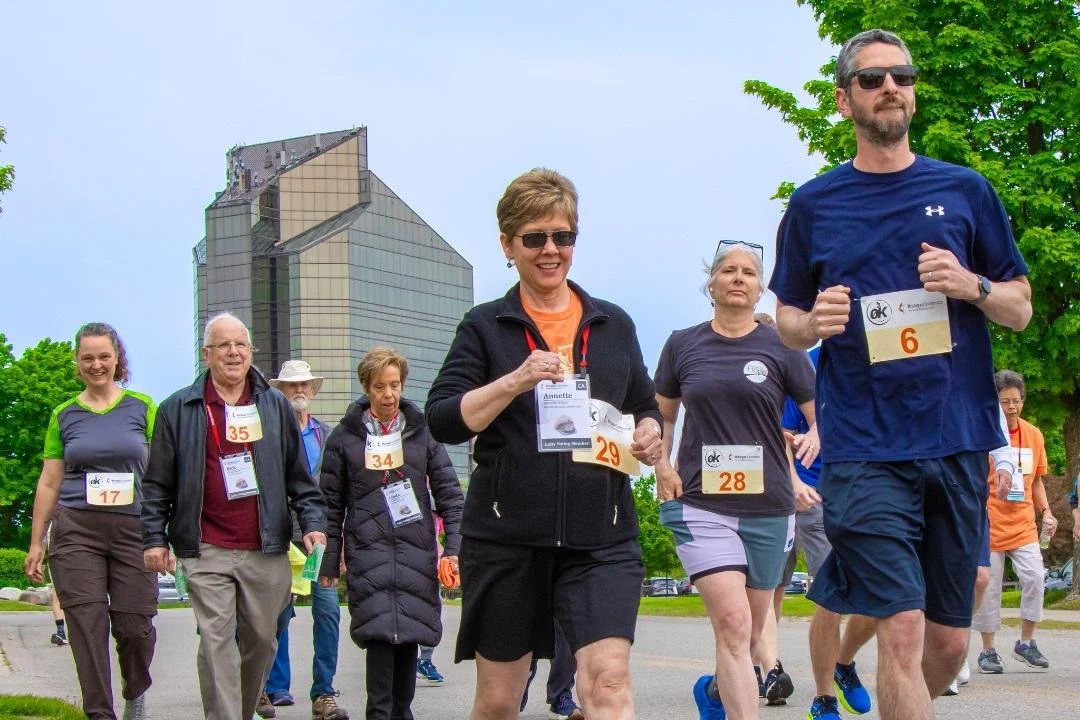
Annual Conference attendees join in the annual fitness walk-run benefiting child hunger relief in Michigan. ~ MIphoto/Jonathan Trites
Walther’s project in the PCL program focused on burnout among Michigan Conference clergy. According to Walther, Michigan has approximately 500 active clergy and 1,000 clergy who are “retired,” though some of these retirees are still serving congregations in a pastoral role. He also knows firsthand that the demands of ministry can take a physical and emotional toll. He knows six clergy colleagues who recently left ministry due to burnout.
Walther has announced that, with the help of a $300,000 grant from the Michigan Conference Board of Pension and Health Benefits, two new initiatives to address clergy health and well-being will begin on July 1, 2026. If the maximum number of grants is awarded from this fund, 60 clergy will be helped.
A clergy renewal grant program has been established to provide grants of up to $5,000 for renewal leave. The United Methodist Church’s Book of Discipline allows up to three months of leave for clergy every seven years. These grants can be used to support funding needs at the church(es) they serve and/or to cover the clergy person’s actual renewal leave expenses, such as educational or travel costs. A requirement of this program application is to develop a plan for the renewal leave. The program will also help pay for a clergy coach to assist applicants with up to three sessions to create that plan.
A second program will provide up to $4,000 every four years for wellness support. This grant is designed to help clergy cover the costs of activities that support their well-being, such as gym memberships, wellness medications not covered by insurance, or a wellness retreat.
Applications for these new grant programs will be available online beginning at midnight on July 1, 2026. Once live, links to the grant applications will be available on the Benefits web page.
Walther notes that healthy clergy are essential to the church’s future. Past wise planning and investments by church leaders have made this new grant possible. Walther hopes that sound administration will enable both clergy and congregations to benefit from this program in 2026 and beyond. He invites individuals and congregations who wish to offer additional financial support for this new health and wellness program to contact him at 517-347-4030, ext. 4110, or by email at jwalther@michiganumc.org.
The publication of this article was made possible thanks to generous financial gifts from local United Methodist churches in Michigan through Ministry Shares. Thank you! Learn about the impact of Ministry Shares on mission and ministry in Michigan and around the world.